


Spotlights on: Nicholas Thomasma and the Michigan Music Alliance

A Voice for Michigan's Musicians
A singer-songwriter, arts advocate, and now Executive Director of the Michigan Music Alliance (MMA), Nicholas Thomasma is an example of how passion extends beyond playing.
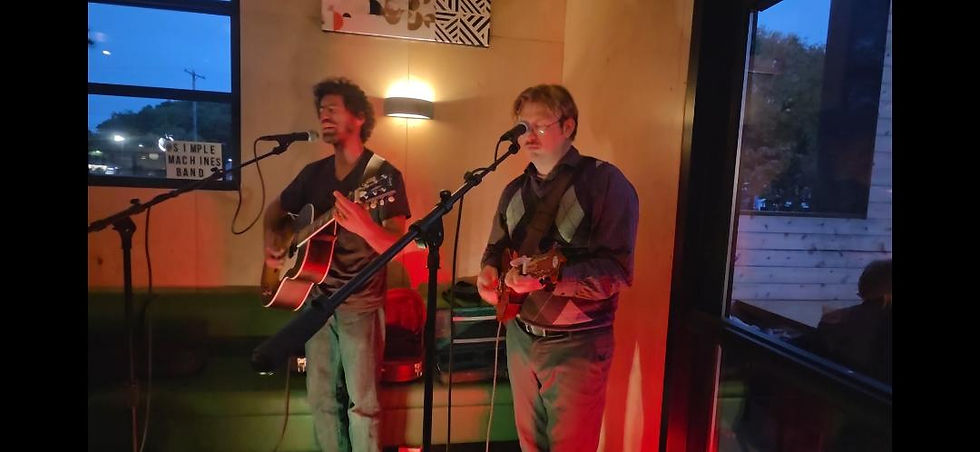
He built his career from the ground up, coming from a radio DJ to a performing musician, then a nonprofit leader. However, as a singer-songwriter from the jump, he understands the life of a performing artist—performing both solo acoustic and with a band called Nicholas James and the Bandwagon.
During performances, he builds a setlist around not just his own music, but finding ways to please the audience while staying close to his own artistic roots, heavily influenced by 60s-70s music and the folk/singer-songwriter tradition.
"I try to pick songs that speak to me, but also would be pleasing to an audience so that we can all enjoy the art of songwriting together."
From Mini Grant to Executive Director
As with other performing artists, he found himself struggling to gig during the pandemic; one of many out-of-work musicians statewide. It was at this time that the MMA recognized the need and shifted its focus toward awarding mini grants, keeping the industry alive in the form of over $40,000 distributed across hundreds of musicians.

Thomasma was one of those awardees, having found the organization through this effort. He received a mini grant, and that familiarity soon turned into supporting MMA as a volunteer.
"I was awarded a mini grant for like $250, and basically said, this is awesome, I'm going to support this organization however I can,” he recounted.
After that, he became a board member and in the face of the founding director Elle Lively’s retirement from the organization, stepped into the Executive Director role.
"I turned to the rest of the board and said, 'Who's going to run our business,” Thomasma said. “And they said, ‘You are.’"
Building the Business Behind the Music
In 2019, Lively made a Facebook post, asking what the music community needed. The response was immediate and overwhelming: people commented asking for all different aspects of resources for professional development.
The organization was founded based on that, though just a year later, the sights changed to making sure artists could survive the COVID-19 pandemic through the mini-grant relief Thomasma was a recipient of. Post-pandemic, MMA returned to its original intentions: providing opportunities for artists to understand the economic and marketing aspects.
Their two flagship annual events, the spring Music Econ Summit in Grand Rapids and the fall Business in the Key of D event in Detroit. Both events invite industry speakers and professional mentor opportunities to provide attendees with access to information that is not only encouraging, but essential to success.
"There is no real clear path towards becoming a professional musician,” Thomasma explained. There was a profound need for an organization to teach the business side of the music industry."
In the meantime, MMA offers webinars and regional mixers for musicians to come together. At times, however, it's easy for people to misunderstand what the organization does upon first glance.
"I get a lot of people who hit us up like, hey, if you've got room for us, we'd love to play at your event,” he said. “That's not really what we do as an organization."
The New Noise: AI, Burnout, and Rising Costs
Even for artists who got through the pandemic era of performing, or for those who (re)started afterward, the challenges haven’t disappeared. The age-old story of inflation and rising costs of gas, hotels, and streaming subscriptions continues to be a barrier for gigging artists, while musician pay often stays stagnant.
In more recent years, a new issue has begun flooding the atmosphere: AI-generated music.
"AI music is proliferating throughout the internet,” he said. “We also live in a very content-heavy society where there's a need to constantly be posting, and that's counterintuitive to an artist."
He describes how the constant pressure to create content can pose a danger to artists' creativity, specifically bringing up burnout. From his own experience, highlighting the art first is the best way to reach an authentic audience.

"Great music always, always stands out. People always connect when they see a great
performance or hear a song that they truly love,” Thomasma described.
Redefining What It Means to Thrive
From his seat, the music industry isn’t lacking money. He notes an ~$85 billion scale across the business, but one issue: the largest amounts are skewed toward the top.
The Michigan Music Alliance is dedicated to creating an ecosystem where musicians can thrive. He defined thriving as artists being able to earn genuine, sustainable income from music.
“Our vision is a Michigan music community where musicians are thriving, and when I think about thriving, I'm thinking about lots of performance opportunities, different revenue streams, people who can make a living, buy a home, have children, you know, support their family through the arts,” he explained.
He recognized, though, that without media outlets dedicated to covering musicians and gigs after the decrease in music and arts and entertainment coverage in larger news networks, the industry would be lacking.
"I don't think it works without you guys,” he expressed.
Local press and independent publications, such as Local Spins, Sonic Coast, and even Cherry Capital Beats, help legitimize the careers of emerging artists throughout Michigan, whether they’re playing their first gig or their hundredth.
Show Up, Connect, Repeat
For those up-and-coming, he gave one piece of advice: go to shows. In an industry run on relationships, the best way to build them is still face-to-face, even in an increasingly online world.
“When I go to shows, I leave feeling inspired. That's the real magic of music: connection is what drives the industry,” he said.
Go alone, with your musician friends, or with longtime supporters. The community is there, waiting in the shared experience brought by live music.
A State That Has It All
Michigan itself is a unique environment to be a musician. Many new artists, and even Thomasma himself, have remarked on how encouraging and community-based the industry is in Michigan, especially in comparison to larger markets.
In terms of genre, another one-of-a-kind part of the Michigan music scene is its variety of genres. Nashville is known for country, while Seattle has a hold on grunge; Michigan reaches beyond genres.
"In Michigan, we have it all,” he recounted. “This is also the birthplace of EDM."
From Aretha Franklin and the iconic Motown moment in history to standing as the root of EDM, the state serves as the birthplace of pop star Madonna and renowned rapper Eminem, alongside a list of other impressive voices through the ages.
"You can't have a hip hop artist on the same bill as a jazz artist or a rock band anywhere else,” Thomasma said. “And here, that's commonplace."
For more information on the Michigan Music Alliance, check out their website or keep up with them on Facebook and Instagram. Next weekend, on October 17th, the MMA will be hosting Business in the Key of D, featuring 25+ artists and industry professionals featured across workshops.


Comments